
‘Heart Attack’ Leads to a Diagnosis of Loeys-Dietz Syndrome and Shines Light on a Family’s Medical Mysteries
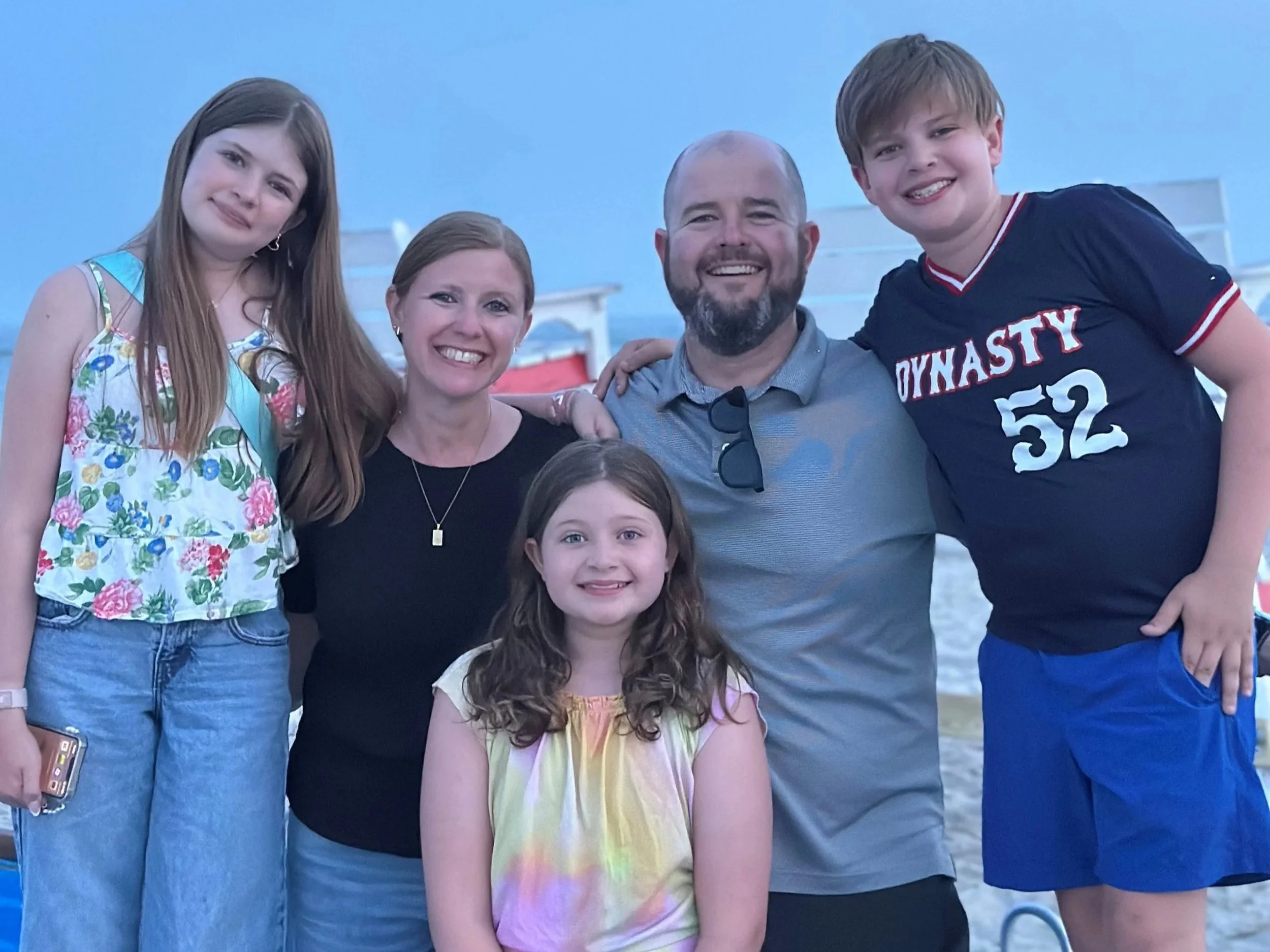
It was a few days before Christmas 2024 and Liz McAllister was in full holiday swing. She left work early and stopped by Target to pick up sprinkles. The plan? To head home, put on pajamas and bake cookies with the family. But when she got in the car she didn’t feel well. At first she wondered if she was having a panic attack, but the chest pains made her uneasy and she headed to the nearby ER.
It was a good call. Moments after arriving, Liz had a massive heart attack.
“My husband arrived just in time to see them shock me back to life,” she says. The next day the cardiologist who saved Liz informed her that it was a miracle she had survived: she had actually suffered a spontaneous coronary artery dissection with a completely occluded Left Anterior Descending artery.
The cardiologist told Liz: “Oh, this is just something that happens to women your age.”
But Liz was shocked. “There I was, strapped to an ICU bed, thinking, ‘This doesn’t seem right. I’m very healthy. I have no signs or symptoms of heart disease.’ But the doctor was very dismissive. He said:
‘Oh you’ll be fine – get on an antidepressant and avoid getting stressed out.’”
But two days later, a surprise phone call not only shed light on Liz’s sudden cardiac troubles, but led to a surpring and overwhelming diagnosis for four members of her family
The phone call was from the NIH and concerned her 13-year-old son, Caleb. Three years earlier he had been sitting on the floor counting Halloween candy with his sisters, when he “suddenly fell on the ground screaming, saying he felt like he had been stabbed in the back.” Over the next year, the pain came and went. “It was just debilitating. Some days he’d miss school and couldn't get out of bed, he couldn't do baseball and swimming,” she says. “He had a plethora of tests, but all they could come up with was that he had signs of early onset osteoporosis, which for a healthy 10-year-old didn’t make sense.”
They bounced around to different specialists: orthopedics, a spine doctor, oncology, rheumatology. There were suggestions that it was “all in his head” – even Liz got sent for psychological testing.
“But in my heart, I knew that he was not making it up, that he was really suffering and that there had to be an explanation for it,” she says. Eventually, they were referred to the NIH for a full genetic workup.
Now, months after the initial testing, the NIH was on the phone telling Liz that they had found something – and that it had significant cardiac implications, including a strong risk of dissections. “ I felt like the air had been sucked out of the room. I asked her to repeat what she said, and I told her: ‘That just happened to me.’”
The scientist’s reply? “I can almost guarantee you that that is not random. You and the rest of your family need to get genetic testing – quickly.”
That day, they learned that Caleb has Loeys-Dietz syndrome, type three (LSD III). Within two weeks they found out that Liz, her 14-year old daughter, and her 68-year-old mother also have the same type of LDS. Her husband and younger daughter, Hadley, do not have LDS.
LDS-III is distinguished from other types by its SMAD3 gene mutation and a primary focus on cardiovascular complications, including aneurysms, as well as early-onset osteoarthritis.
“I had heard of Marfan. I had heard about VEDS, but I had never heard of Loeys-Dietz. It took a little time to sort of digest it all,” she says. “My first instinct is to read and research and at first it felt like a lot.”
The condition presents differently in all four family members – each of whom will need cardiac monitoring for the rest of their lives. Liz’s son has musculoskeletal pain, as well as aortic issues that will need to be repaired when he is an older teen. Liz’s mother has had very few symptoms, except for some arthritis which may or may not be related. Throughout her life, Ella has experienced multiple severe food allergies, as well as asthma and eczema.
“Ella had her first anaphylactic incident at nine months old. So she has always known that things are different for her and that she sees a lot of doctors and that's how she keeps breathing,” says Liz. “She's really good about asking and reading labels and knowing what she needs to do to keep herself safe. It’s made her incredibly resilient. She actually wrote about her condition in an essay to get into a high school magnet program. She compared herself to Frida Kahlo and her struggles that people don't always see.”
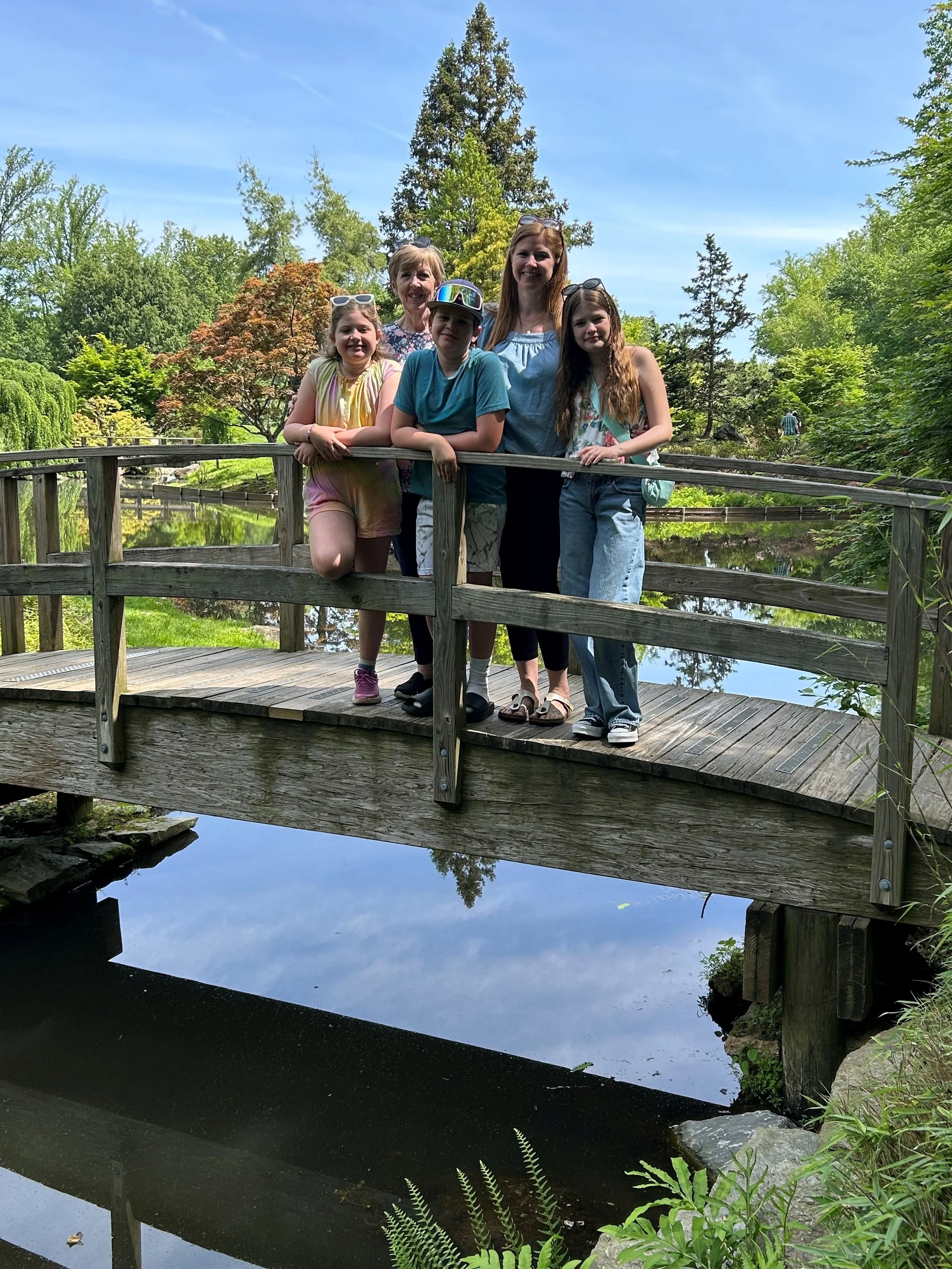
Caleb is having a harder time dealing with the diagnosis and is hesitant to talk about it. “Neither of them like the limitations and restrictions that are put on them,” she says. “They both really just want to do all of the things that their peers are able to do but have to consider their own safety. It’s a heavy burden for young teens!”
Liz is looking forward to getting involved in the D.C. Metro Walk for Victory, to be held on May 9, 2026. “Having a sense of community and knowing that there are other people that are dealing with a similar thing will be huge. I think the kids, especially, feel very isolated. With the fear of the unknown, it’s a, tremendous burden for them to carry.”
Liz is also glad that more doctors and specialists are getting up to speed on the conditions. “Hopefully, there will be less ‘I don’t know’, or ‘There’s nothing wrong, you’re making it up.’” Realizing that there are scientists that are studying LDS and related conditions fills Liz with hope. “We’re here for whatever we can do to help support the research and further the Foundation’s mission.”
Get connected and find support. View a listing of upcoming LDSF events and support groups.